

When her three-inch golden lilies were wound tight in the dying amber light of the Qing dynasty, great-grandmother Ho did not yet know that her feet—folded inward, bone bent to obey silk and cotton—would walk across four different names of a nation, pressing into the briny southern mud a trail of shallow and deep hollows filled with blood, sweat, and something even more enduring than either.
In 1927, when the monsoon winds of eastern Fujian blew the ash of burnt paper money from the ancestral hall into the paddies, she became a widow at twenty-six. Her husband loosened his grip on the world without ceremony, leaving behind a single son, Yiqiao, six years old and no taller than the wooden bow used to thrash cotton into softness. The wind that year carried away incense smoke and the faint sweetness of mourning; it also carried away the last illusion that grief could be afforded in full.
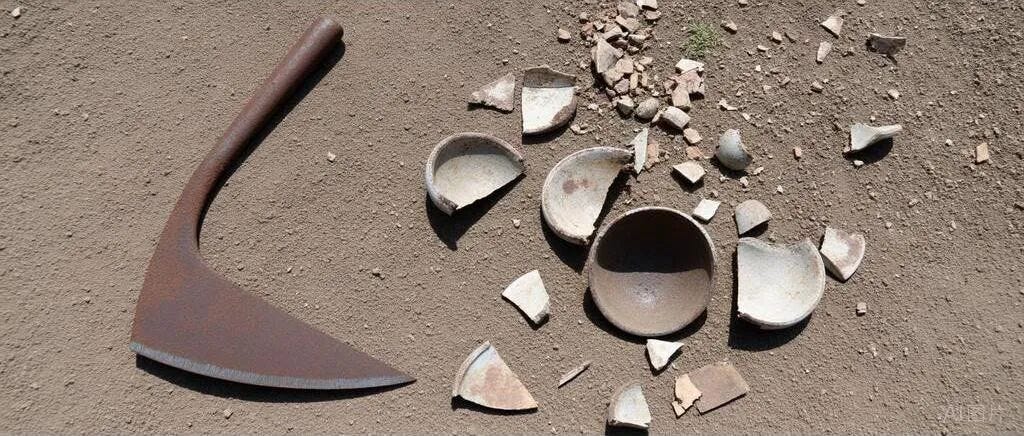
The children who survived in that village were said to possess bones harder than the customs that received them into the world. For at birth they were governed not by tenderness but by objects older than memory. A boy was welcomed by a sickle—cast iron, crescent-curved, its rust blooming like dried blood, breathing out the damp scent of earth and rain. It had to be rusted; the thicker the corrosion, the better the blessing. With a single metallic snap, the umbilical cord was cut, and with it the boy was fastened to iron—tempered, it was believed, into the lineage of men who bent over fields and claimed them.
A girl was received differently. For her, a shard of broken porcelain sufficed—a bowl once used for rice and clear water, worn thin by years of hunger and washing, its pale edge hiding a quiet blade. No one remembered when the custom began. It seemed less invented than sedimented, layered like silt at the bottom of a river. The sickle promised endurance. The shard promised departure.
Even when tetanus locked newborn jaws in rigid arcs, even when foam gathered at the lips of boys who had been christened in rust, faith in iron did not loosen. And the girls who survived the porcelain’s edge were not necessarily meant to live; water could silence a daughter more quickly than hunger. Yet still the objects were kept near the stove, warmed by firelight, as if heat could soften destiny.
The women never questioned them. They guarded the sickle and the shards as they guarded their silence, which was passed down with the same unquestioned authority—handled daily, worn smooth by repetition. In that era, when even shadows appeared thin enough to be rinsed away with a basin of water, great-grandmother Ho sat in the dim main hall twisting hemp rope, her bound feet tucked beneath her, mud permanently inhabiting the half-moons of her nails. Land was her only theology. Soil was the only scripture she trusted.
Decades later, red flags arrived like a second harvest and were planted on the hill where stillborn infants had once been buried without names. Land was measured, redistributed, renamed. The air carried a green scent—grass crushed under hope. She did not understand class theory or revolution; she understood only that sweet potatoes must be planted, and rice seedlings bent into water, if her grandchildren were to continue breathing.
Women gathered beneath ancestral beams to learn characters by kerosene light. She and her daughter-in-law Qiujin traced their names with trembling seriousness, the strokes crooked but deliberate, as if each character were a stake driven into shifting ground. Next door, teachers left behind from the Republic—voices still rounded by old scholarship—taught village children to pronounce the future correctly. For a brief span of years, even the most remote mountains felt like ore being washed clean, waiting for gold veins to reveal themselves.
But land has a temperature that can cool as quickly as it warms. Grain was surrendered. Cooperatives multiplied. And the second grandson Ho Jianguo was born. In 1958, a wind passed through the fields that called itself leap and forward, and when it receded it had taken the rice and the dignity of those who planted it. Pots, pans, and any object that glinted like metal were seized and melted toward an imagined furnace. The soil slipped once more from calloused hands, grain reports rising higher than stalks ever had.
Then came the years when hunger learned to count.
In communal canteens, pots were scraped thinner each day. The great-grandmother’s bound feet shuffled endlessly through fields in search of edible ghosts—sweet potato vines, wild roots, clay kneaded with sawdust and husks.
Winter of 1961 arrived like a fist of needles. Under a dim kerosene lamp, Yiqiao thrashed cotton with his wooden bow, the hollow thrum echoing inside stomachs that had forgotten fullness. When he was exhausted to the point of collapse, he would reach for the erhu hanging in the corner. He would play a few notes, the bow dragging across the strings with a parched, bitter sound, like a wail squeezed from dry gravel. His large, calloused fingers—hands that spent their days thrashing cotton—pressed upon the thin strings so heavily that one feared they might snap at any moment, breaking the last vestige of sound in the house.
Jianguo would huddle in the residual warmth of the stove, watching the battered instrument with its loosened snakeskin. To him, those shivering strings looked exactly like the family’s livelihood—terrifyingly thin, yet pulled excruciatingly tight. One string pulled at the past, the other tugged at tomorrow, and suspended between them was the precarious fate of the entire family.
Yiqiao’s wife, Qiujin, worked alongside the young children to twist straw ropes, her fingers worn bloody by the coarse stalks; the wounds would scab over, only to be split open again by the biting cold. Between the communal canteen and the creeping onset of malnutrition, Qiujin’s legs swelled until they looked like two translucent radishes. Each evening, the family of six divided a pittance of rations that was pitifully small. The seven-year-old eldest daughter looked down at the tiny handful of white rice in her steaming tin—barely enough to cover the bottom of the jar—and quietly poured it into her mother’s. Then, making the excuse of going out to cut grass, she headed to the pile of refuse at the village entrance. There, she scavenged for discarded, half-rotten oranges. Using her fingernails to pick away the moldy parts, she shoved the bitter, sour flesh into her mouth, attempting to use that throat-searing acidity to cancel out the hollow ache burning in her stomach.
She and her sister never stepped foot in a classroom again. Girls were paste, it was said—meant to seal the cracks of a household so that their brothers might pass through intact. They were destined to labor at home, sacrificed so the sons could be schooled.
A year after the famine loosened its grip, an admission letter arrived for the eldest son, Ho Jianye, smelling faintly of fresh ink and distant cities. It was locked in a drawer at the brigade office, folded like a crane whose wings had been clipped. Yiqiao’s small acts of selling thread and chicks to survive were renamed speculation, evidence of a tail that wagged in the direction of capitalism.
Excellence without lineage was an accusation.
The family knelt on bluestone before the commune secretary, foreheads striking rock until mercy took the shape of a number: six hundred yuan. A century’s worth of peasant savings condensed into a single demand. The ancestral house was sold. Chickens, ducks, piglets, memory itself. And so Jianye departed southward into Shanghai’s wide avenues of possibility, forty-eight yuan a month anchoring him to a new identity.
Behind him, the family moved into ruins at the village edge. Transparent plastic sheets fluttered overhead; moonlight filtered through in a gray-blue pallor that made even breathing look provisional. Rain struck the plastic like puppets cut loose from their strings. In that light, eleven-year-old Ho Jianguo wrote two characters over and over in his textbook: bandit. He pressed until the paper nearly tore, as if force alone could puncture fate.
In those nights when the flapping of the plastic sheets made sleep impossible, he reached for his father’s erhu. The neck of the instrument had been rubbed smooth and shiny, like a length of ancient bone. He began to pull the bow—at first, it was the harsh, grating sound of a saw, as if protesting the brutality of fate. Slowly, he learned to find the vibrating positions with his fingertips. While his brother studied electrical theory in Shanghai’s bright classrooms, Jianguo sat in the leaking ruins, using those two thin strings to confront hunger and rage.
The plastic sheets hissed in the wind like the world’s cold laughter; but the erhu’s voice—deep, circling, carrying the damp scent of Fujian soil—pressed back against the noise. It was like a pair of rough hands, attempting to smooth out the jagged creases of a chaotic world.
When the storm later named Cultural Revolution arrived, those inked grievances were transformed into evidence. He was labeled red outside, white within—peasant in skin, enemy in marrow—and sent to an agricultural school housed in a broken temple. There he learned to mend tools, but not to extinguish desire. Why had his university-educated brother remained silent? Was silence the cost of six hundred yuan? Or had caution grown alongside knowledge?
Then I might as well teach myself, he thought. But what to study? Mathematics seemed to be the most advanced science he had ever come into contact with.
But his elder brother told him, “Mathematics is hard. You won’t be able to learn it.”
Then psychology?
“There are no textbooks. Even if you study it, it’s useless.” Jianye replied.
But Ho Jianye mailed his younger brother a stack of mechanical drawings for vehicle models. The pages were densely covered with bearings, gears, crankshafts, and drive rods, each marked with careful measurements and ratios. Those precise structures, those interlocking gears, suddenly glimmered in his ruin-like days, like a lamp in the night that refused to go out.
Jianguo flattened, sanded, and pieced together scraps of discarded wood and sheet metal he had scavenged from everywhere. The knife sliced his fingers; the sharp tin cut open his palm. Blood seeped into the grain of the wood and was quickly wiped away. One by one, the gears were carved out, as if he were digging the bones of the future from the soil. Outside, the wind slipped through the broken eaves, but under the dim lamplight he measured and remeasured each proportion, as though he were mapping a road that had yet to appear—and the distant dreams that might travel upon it.
By the time he progressed from automobile models to ship models, schools reopened. The school system was still drastically shortened—six years of primary school, two years each for junior and senior high—but because there were so few students, sixteen-year-old Ho Jianguo was released from the agricultural middle school reserved for the “Black Five Categories” and returned to the regular academic track to attend junior high.
His father muttered, “There’s already a college student in the family. If you go back to school too, that’s another pair of hands gone.”
So he had no choice but to thump his chest and promise to wake up two hours early every day to twist hemp rope, finish his daily quota, and only then go to school.
In this way—twisting rope by dawn, assembling models by night—several years passed. By the time he graduated from high school, his electric torpedo speedboat model earned him a place in the People’s Liberation Army’s expansion drive. He put on a navy uniform and boarded a southbound train that carried him all the way to the South Sea Fleet at Shajiao in Humen. There, where the British opium was combusted a century ago, he became an instructor in a technical training unit, specializing in the study of speedboat engines.
When Ho Jianguo finally leapt onto a real torpedo boat for the first time, the models he had labored over in the ruins seemed to come alive. He did not need a manual; he could understand every vibration of the engine, feel each surge of pressure inside the cylinders.
The erhu he had brought from home sometimes accompanied him into the cave where Lin Zexu had once hidden his cannons that fired at the opium fleets. Outside lay a sea dark with surging waves. The wind blowing into the cave mouth carried the briny smell of salt. Moss covered the stone walls; waves crashed against the rocks with a dull roar, mingling with the sound of the erhu and piercing the damp air.
In that moment, Ho Jianguo felt for the first time that he was no longer a poor boy from the rubble, no longer an exiled member of the “Black Five Categories.” He was the helmsman of this new stretch of sea.
I'm glad I came across this piece, the story is beautiful and the imagery so raw I felt transported to and through those changing times. I think history should be shown like this.