

2026 marks my tenth year in Austria.
Vienna has quietly overtaken Paris as the city I’ve called home longest in my twenty-plus years in Europe. There is a certain irony in the fact that my German still pales in comparison to my French, yet this very awkwardness speaks to the city’s quiet inclusion. Almost everything in my life is resolved seamlessly in English, leading me to a recurring delusion: is Austrian German merely “borrowed” from Germany? After all, this country is so understated that “Austria” is perpetually confused with “Australia,” and more bizarrely, “Vienna,” a perennial champion of the world’s most livable cities, is often mistaken for “Vietnam.”
The deeper I look, the more I appreciate Vienna’s restraint. It is a masterful composition of the classical and the modern, the pluralistic and the pragmatic, the grandiosely luxurious and the enigmatically hidden. I find myself increasingly curious: how has this land, resting in the gargantuan shadow of its neighbour Germany, managed to preserve a national character so distinct from it? One still infused with the languid air of an old empire?
The divergence between Austria and Germany begins with memory.
From the 15th century to the dawn of the 20th, Austrians lived under the roof of Europe’s ultimate “Old Money” dynasty, the Habsburg Empire. This leviathan spanned Central and Eastern Europe, ruling Spain, the Netherlands, Hungary, and Czechia, with Vienna as its beating heart. Meanwhile, the rest of Germany was a fragmented mess of over 300 petty principalities, impoverished, provincial, and perpetually squabbling. Berlin in the 18th century was little more than an unremarkable town. This historical chasm birthed a deep-seated Austrian superiority, much like how a native Shanghainese might view anyone else as a “country bumpkin.”
The Habsburgs, to their great credit, had a more elegant strategy than war.
In 1477, Maximilian I married into the Netherlands and Belgium. In 1496, his son secured Spain and the American colonies. By 1526, after the kings of Hungary and Bohemia fell fighting the Turks, his grandson Charles V simply stepped in via existing marriage ties. By the 16th century, the Habsburgs ruled an empire upon which the sun never set. As the family motto famously put it: “Let others wage war; thou, happy Austria, marry.”
This map, stitched together by contracts rather than cannons, made 18th-century Vienna a multilingual cosmopolis of Latin and French. While the Hofburg Palace glittered with diplomats and artists, Berlin remained a swamp-ridden outpost of a few thousand souls. The class divide between dynastic fortune and agrarian poverty was set in stone.
If politics drew the borders, the Reformation dug the trenches.
In 1517, Martin Luther nailed his Ninety-five Theses to the church door in Wittenberg. The Church was then a greedy black hole, and Luther’s doctrine of justification by faith was lethal: if salvation is a private matter between man and God, why pay taxes to Rome? Why feed a bloated clergy? This wasn’t just a theological debate; it was a liberation of Northern Germany’s wallet. Northern princes smelled freedom and seized the chance to nationalise Church lands. But the Habsburgs, as the “Chief Defenders of the Faith,” had to hold the Catholic line to maintain their imperial legitimacy.
By 1555, the Peace of Augsburg established the principle of cuius regio, eius religio: whose realm, his religion. If you didn’t like your ruler’s faith, you packed your bags. The first great split of the German soul was finalised: the Protestant North versus the Catholic South.
This tension exploded in the Defenestration of Prague in 1618. When Habsburg officials tried to shutter Protestant churches, local nobles threw them out of a 20-metre-high window. Miraculously, they landed in a pile of manure and survived. The Catholics called it a miracle; the Protestants called it devil’s luck. The Thirty Years’ War that followed turned Germany into Europe’s slaughterhouse, wiping out a third of the population. When the dust settled in 1648, the scar was permanent: the North learned to find security in iron, thrift, and Prussian discipline; the South found solace in the Baroque, sensual, artistic, and ritualistic.
One began to march. The other began to waltz.
After defeating the Ottomans at the gates of Vienna in 1683, the city erupted in a building frenzy of palaces and cathedrals. The Church used Baroque art, the grand frescoes and gilded sculptures, to mock Protestant austerity. Austrians learned to savour life: wine, dance, and the Gemütlichkeit that became their core value.
Prussia, however, followed the Calvinist work ethic. Wealth was a sign of grace, but only if earned through “Calling” (Beruf) and tireless duty. This birthed the industrious, punctual, and rule-bound Prussian character. Berlin, under the “Soldier King” Frederick William I, was a barracks. He hated art, disbanded the court orchestra, and spent his time kidnapping 1.9-metre-tall men for his “Potsdam Giants” regiment. His son, Frederick the Great, was forced to trade his flute for a sword, eventually seizing Silesia from Austria in 1740 and cementing Prussia as a military titan.
Even today, the slogans endure. Berlin’s mantra is Ordnung muss sein: there must be order. Vienna believes in In der Ruhe liegt die Kraft: in stillness lies strength. It is the philosophy of the unhurried. To a Viennese, German efficiency often looks like a frantic lack of respect for the art of living.
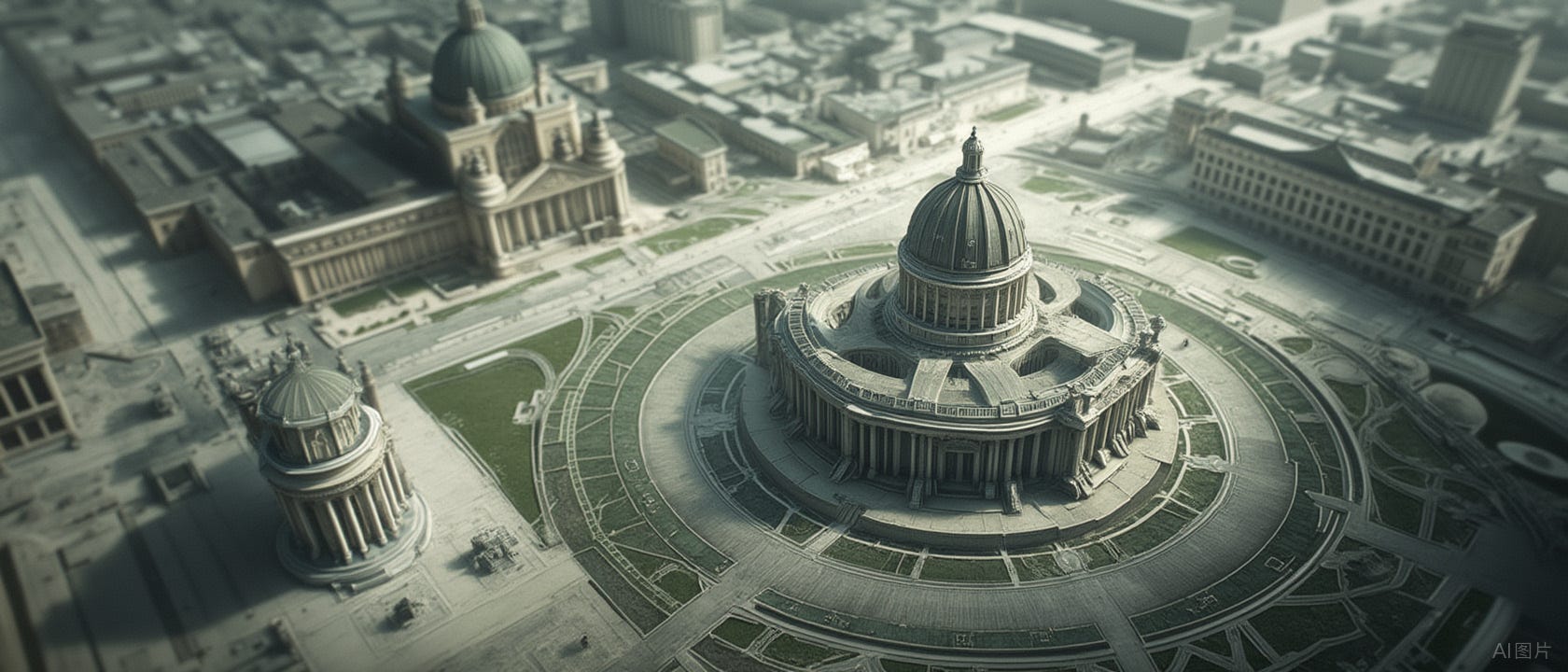
The 19th century turned the “Old Money” disdain for the “Prussian Country Bumpkin” into a bitter rivalry.
In 1866, the two finally clashed for the leadership of the German world. It was a slaughter of the old ways. Austria, the “Cultural Purist,” fought with Napoleonic tactics and muzzle-loaders. Prussia, the “Industrial Specialist,” used breech-loading rifles with triple the rate of fire. In seven weeks, the “Old Money” dream was shattered. Austria was kicked out of the German club and forced to form the Austro-Hungarian Empire in 1867, giving the Hungarians equal status under duress.
Then came 1914. Why did the ageing, crumbling Habsburg giant tether itself to ambitious Germany in a suicidal war? The truth is chilling: Austria-Hungary wasn’t helping Germany. It was a drowning man clutching at Germany as its last straw. When Archduke Franz Ferdinand was assassinated, Vienna feared that without a brutal show of force against Serbia, the empire’s credibility would vanish. But they feared Russia more. So they asked Berlin: “Will you back us?” Kaiser Wilhelm II, the quintessential arrogant “New Rich,” handed them a blank check.
The “Old Money” thought the war would preserve their life. The “New Rich” thought it would bring a swift victory. Instead, it was a bloodletting. The Coffee House Empire was held together by the thin glue of loyalty to an ageing Emperor. When the bread ran out and the British blockade tightened, that glue dried up.
By 1918, the empire dissolved into fragments. Austria was reduced overnight from a world power of 50 million to a 6-million-soul “German remnant” at the foot of the Alps. This fall from the clouds left Austrians in a state of terminal identity crisis. To many, the only hope for survival was to join their powerful, if defeated, German “brother.”
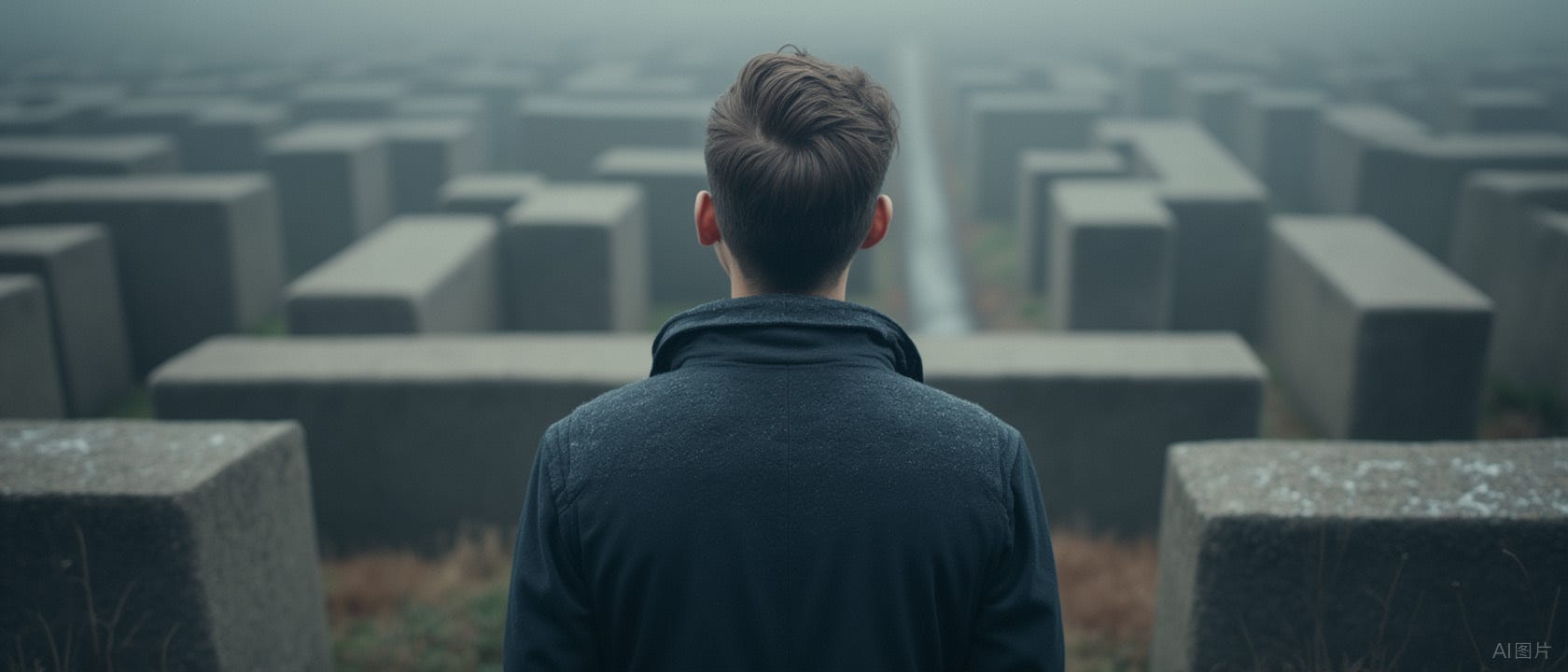
In 1938, Hitler’s tanks rolled into Vienna. The roar of 200,000 people at Heldenplatz, “Ein Volk, ein Reich, ein Führer,” was the collective hysteria of a nation lost. For many, it wasn’t an “invasion”; it was “coming home.”
Seven years later, Soviet tanks arrived in Vienna and American troops marched into Salzburg. The Allies declared the 1938 union void, and Austria was ordered to stand alone once more. Facing the ruins of defeat, the Austrians displayed a masterful political cunning: they crafted the Victim Narrative. By claiming to be Hitler’s first casualty, they successfully traded their complicity for sovereignty. It wasn’t until the 1980s that Austria truly began to reflect on its role as perpetrator. But the victim narrative had already done its work, allowing Austria to emerge as a neutral, stable state by 1955.
On October 26, 1955, the last occupation forces left. That day became National Day, the final answer to the question of identity.
Today, the difference is no longer about blood, but about historical temperament.
The Austrian still carries the calm of a fallen aristocrat: valuing life, mood, and culture, happy to spend an entire afternoon in a café. The German remains the Prussian: a precision instrument of order and punctuality, unable to tolerate a half-second of indecision. One waltzes; the other goose-steps. One says, In der Ruhe liegt die Kraft. The other insists, Ordnung muss sein.
By defining what they were not, Austrians finally had to figure out what they were. The result is a country that feels like a museum of its own memories, and a capital, Vienna, that feels like a cosmopolitan island in a sea of Alpine tradition. But that is a story for next time: how Austria achieved its structural rebranding as a nation.