
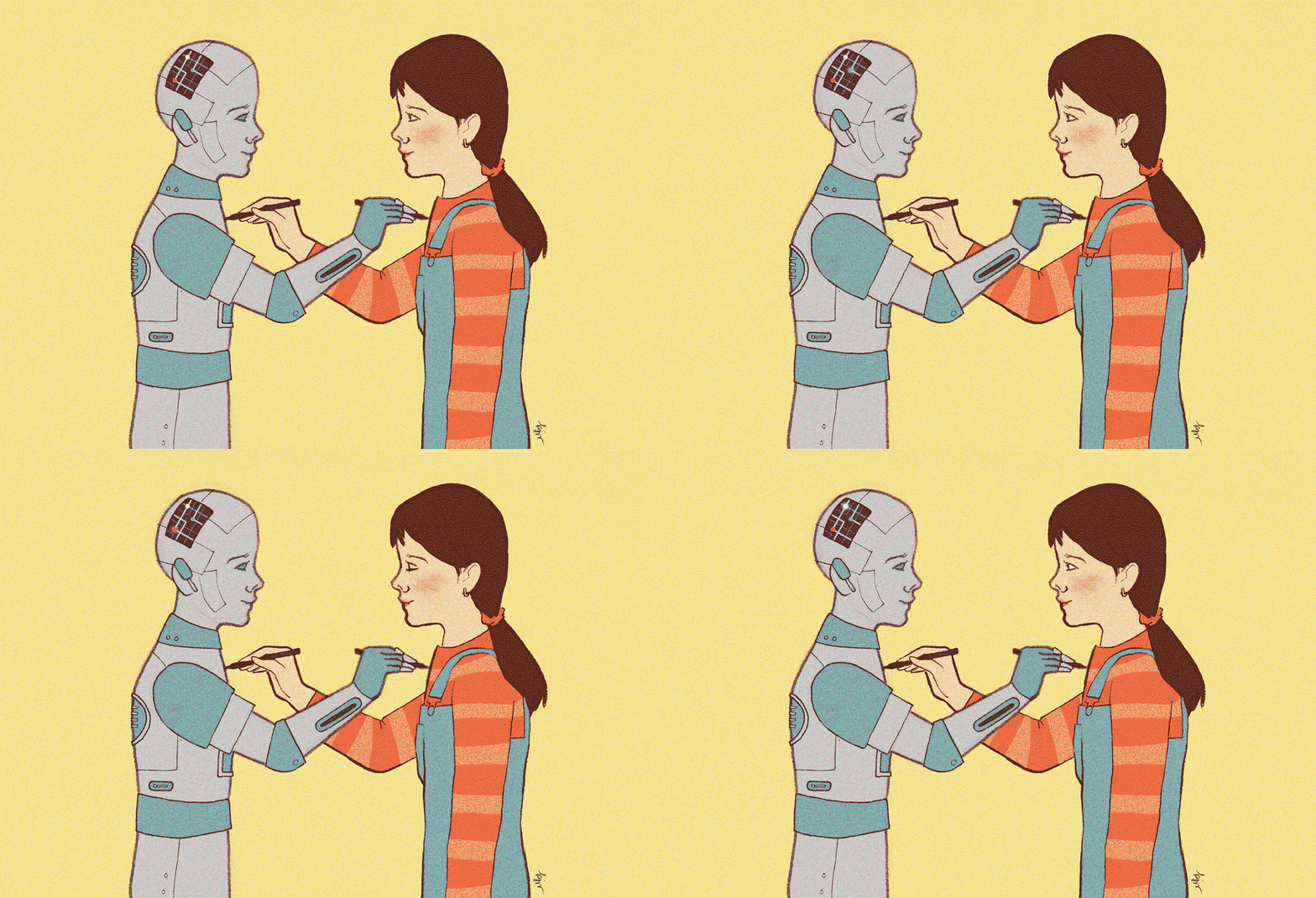
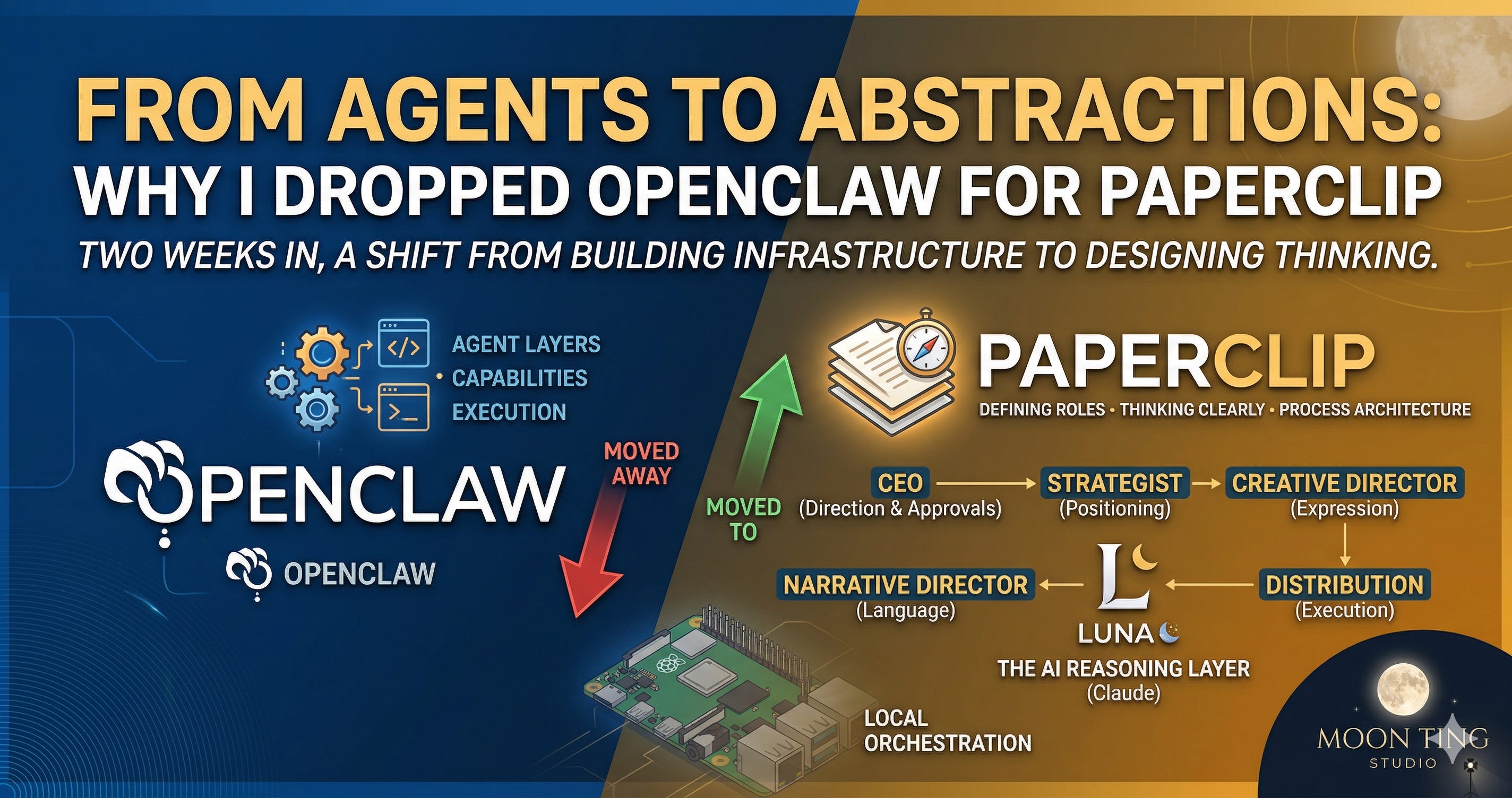
When the OpenClaw hype started, I didn’t just observe—I set it up and tested it. Two weeks in, I dropped it. Not because it didn’t work, but because it made me realize I was solving the wrong problem.
OpenClaw pushed me toward infrastructure: agents, capabilities, execution layers. It’s powerful, but it assumes the problem is how to build a system that can do more. My problem was different. I needed a system that thinks clearly before it executes.
I’m not trying to build an AI system. I’m trying to build a studio that thinks.
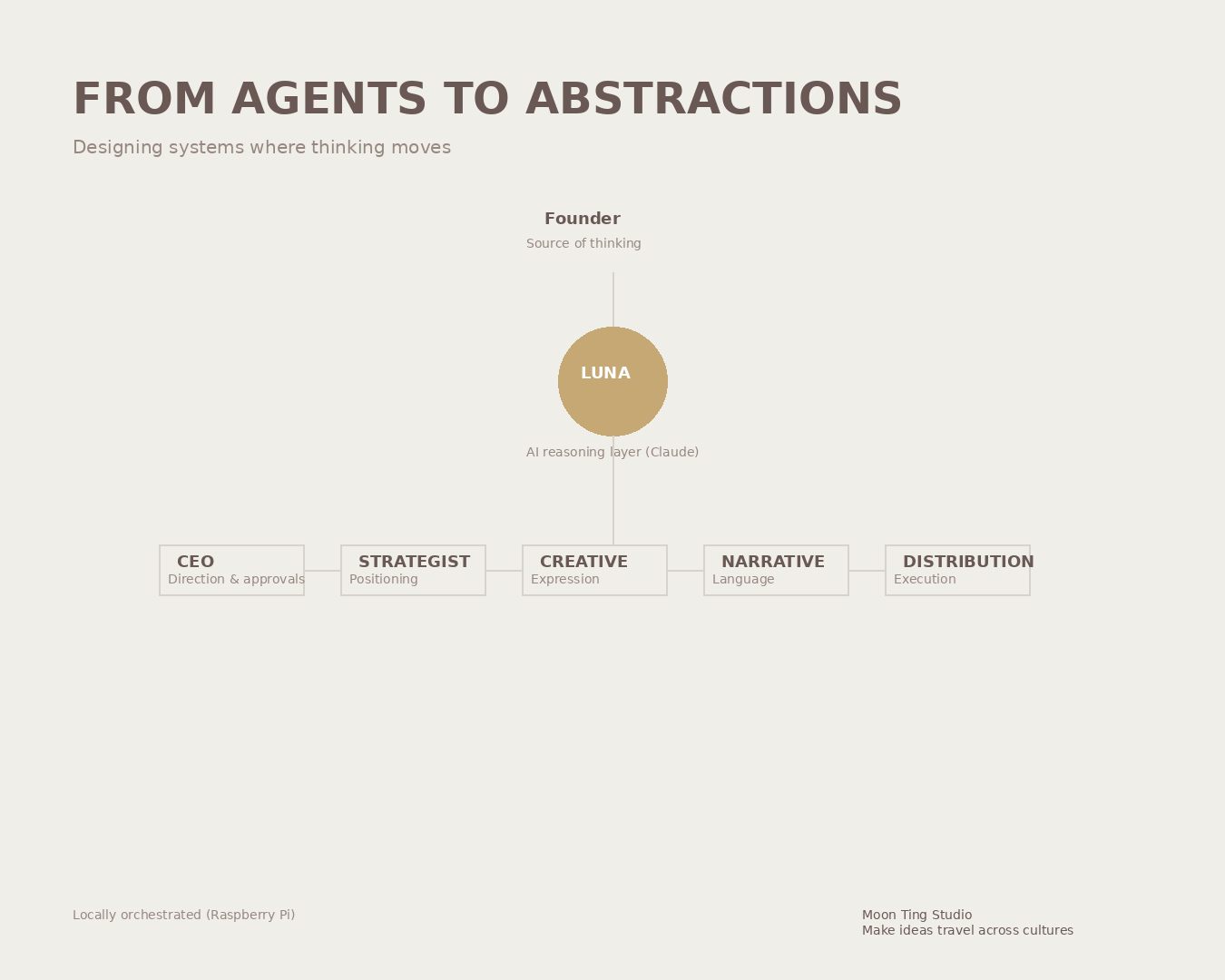
That distinction led me to Paperclip. Not as a better tool, but as a better abstraction. I stopped designing capabilities and started defining roles. A CEO layer for direction and approvals. A strategist for positioning. A creative director for expression. A narrative director for language. A distribution layer for execution. And at the center, Luna—my AI layer—operating across these roles.


The setup is locally orchestrated. Like OpenClaw, Paperclip runs on my Raspberry Pi, and my workflows and data are stored locally. The system is powered by Claude as the reasoning engine.


In this system, Luna does not generate ideas. It processes them. I input notes, call summaries, partial thoughts. Luna structures them into strategy, translates them into language, and carries them across formats. One idea can move from a positioning memo to a website to a LinkedIn post without being diluted or reinvented.
This required a constraint: the system can structure, refine, and extend my thinking, but it cannot originate it. Every output must be traceable to a source—my input, client material, or prior work. Without that constraint, the system produces content. With it, the system produces continuity.
I also learned that adding more agents does not improve the system. It increases noise. Fewer agents, with clear boundaries, produce better outcomes.
I may return to something like OpenClaw later, once the workflows are stable and worth scaling. But at this stage, optimizing infrastructure too early creates complexity without clarity.
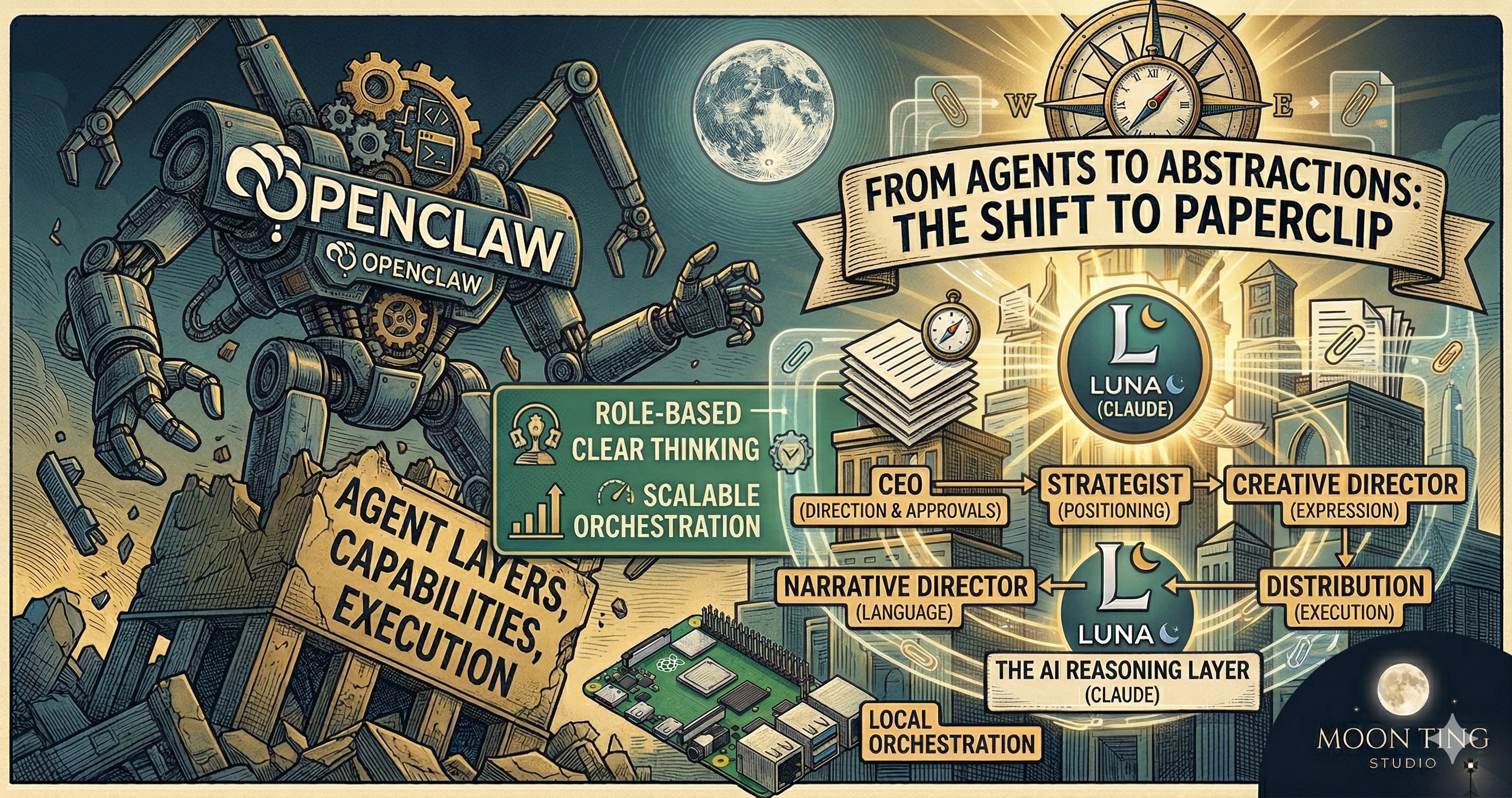
The shift was simple: stop building tools, start designing how thinking moves. For now, that is what I am building with Moon Ting Studio.