


In 2017, on a quiet afternoon in Northern California, two girls stood side by side at the center of a Chinese community event. One was fifteen-year-old Eileen Gu: tall, confident, already carrying the outline of a future star. The other was twelve-year-old Alysa Liu: petite, shy, still visibly young. Together, they sang Girl on Fire. Their voices carried the bright self-assurance of adolescence. In the audience, the elders murmured among themselves: “These are all future Olympic champions.” No one could have imagined that nine years later this casual remark would become reality — that both girls would indeed become champions, but also coordinates of two radically different, almost mirror-image worlds.
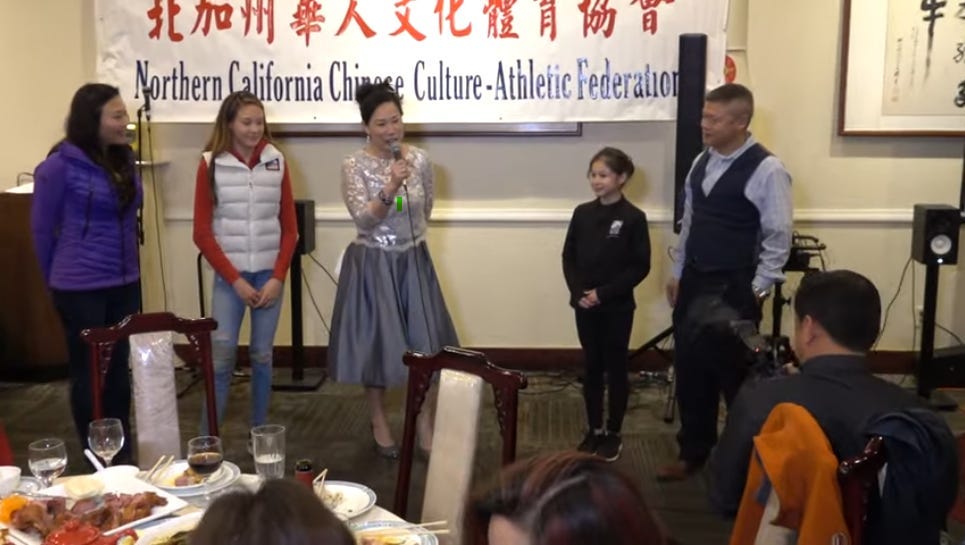
During the 2026 Winter Olympics, Eileen Gu and Alysa Liu were repeatedly placed side by side for comparison. Their similarities were not superficial. Both grew up in the San Francisco Bay Area, both were daughters of Chinese immigrant families, both entered elite athletic systems at an early age. In China, the question became: who better represents China? In the United States: who is more loyal to America? The public discussion fell quickly into familiar frames — nationality, loyalty, success.
But to speak only of nationality or medal counts is to miss the more important question: why did two girls whose starting points seemed so closely aligned make such nearly opposite choices at every major fork in the road? And was this divergence the result of individual choice at all — or had they already been placed on different tracks by something older and less visible, before choice appeared, even before they stood on that stage and began to sing?
Family: Two Instruction Manuals for the World
Their parents shaped the first ways in which they encountered the world.
Eileen Gu’s upbringing reads like a chronicle of global elite formation. Her mother, Yan Gu, belongs to that class of people fluent in rules: someone who moved from China’s intellectual class into the upper circuits of Wall Street and Silicon Valley. What she passed on to her daughter was a kind of incremental thinking — how to identify opportunity, mobilize leverage, and balance identities. In Eileen Gu’s instruction manual, power and capital are not floods to be feared but resources to be translated and redeployed. As long as you are exceptional enough, you can move freely between systems, handling transnational complexity with elegance and ease.

What Alysa Liu inherited was another kind of instruction manual: creased, heavy, marked by the scars of history. Her father, Arthur Liu, was a student leader in 1989 who later fled China through Operation Yellowbird. For decades his life has moved along the edge of a certain shadow — providing legal assistance to political refugees, making a living under surveillance and harassment. Such experience may never be written down as family doctrine, but it can become an instinctive, resistant intuition moving through the air of a household. One daughter learned the art of navigating structures with grace. The other learned the art of drawing boundaries with finality.

An Unfinished History
In many accounts, Alysa Liu’s story is simply the legend of an athlete. But along another, more hidden line, it points to a history that has not closed.
In the Bay Area, there remains a group of exiles still connected to one another — people who participated in the 1989 movement, rebuilt their lives in America, and continued to help those facing political persecution. Their children grew up breathing California air, often without fully understanding the fire-and-blood experiences of their parents. But history did not disappear. It only became quieter. Arthur Liu continued his work: a small office, legal cases for political refugees, strangers applying for asylum. These things will never enter the mainstream commercial narrative. They formed the background noise of a child’s upbringing.
When Alysa Liu won gold in 2026, some on social media called it “the exile’s gold medal.” The phrase belongs to no official register. But it reveals something essential: some histories will not be remembered by the state, yet they may be carried forward in the purest possible way — through the movement of a girl across the ice.
The State’s Summons: Elevator and Telescreen
When the machinery of the state formally entered their lives, the texture of that encounter could not have been more different.
For Eileen Gu, the state was an ascending elevator. China needed a globally visible icon to adorn the image of a sporting power; Eileen Gu possessed an almost miraculous fitness for that role. The training support, the orchestrated praise, the carefully selected safe issues — all of it became the air lifting her upward. She spoke of skiing and female empowerment. It was a freedom that was permitted, and therefore consumable.
For Alysa Liu, the state appeared as an Orwellian telescreen: concrete, encroaching, seemingly everywhere. The strangers who tried to obtain passport information. The tracking device under the car. The companions who remained close during the Beijing Winter Olympics. These formed this California girl’s earliest bodily memory of her ancestral country — not the lightness of being lifted, but the shudder of being watched.
This difference in texture shaped their radically different definitions of belonging. One became a symbol through the state’s absorption and amplification. The other, confronted by the state’s approach, chose distance. Alysa Liu’s father later said she had received an invitation similar to Eileen Gu’s, and refused it. The reason was not complicated: if a certain kind of success requires one to ignore certain things, then that success is not worth having.
Two Female Narratives: The Cost of Freedom
The most affecting contrast here may be the two different interpretations of female freedom these two young women embody.
Eileen Gu’s path is elite perfection at its limit: outstanding, confident, articulate. She has been presented as an example of women achieving upward mobility through individual excellence — inspiring girls, breaking boundaries, becoming the best version of oneself. This narrative works because it is safe and permitted. It fits the logic of the market, and it fits the state’s need for a manageable female narrative. It encourages girls to become stronger, but does not ask them to examine the distributional logic beneath strength and weakness.
Alysa Liu’s freedom carries a different weight. At sixteen — an age when she could have been treated as a peak-value asset — she retired and didn’t want to enter a rink. She went to university, traveled, dyed her hair in that defiant tree-ring pattern, got a lip piercing, and began to rebuild her relationship with her body, her training, her father. When she returned, she no longer submitted fully to the competitive system. She set her own terms: training hours, music selection, the goal of competition itself. In 2026, she skated to MacArthur Park — a song with a buoyant, almost unconventional rhythm — her hair flying loose in waves. She looked, in that moment, almost forgetful with joy.
Space: Coordinates and Roots
Their difference also lives in the spatial structures to which they belong.
Eileen Gu belongs to the world as a coordinate. Her success moves through global nodes — Stanford, Paris, Shanghai, New York — and depends on the capacity to shift between systems, to be legible everywhere.
Alysa Liu points always to a concrete place: Oakland. An imperfect city — marked by inequality and precarity, but also by community connection, multicultural life, and networks of mutual support. She recorded clumsy Mandarin announcements for the local transit system. She grew up there, trained there, and saluted it after winning. That is a different kind of belonging — not portable, not optimized for circulation, but grown from the ground up.
Two Daughters, Two Inheritances
In this sense, what happened between these two lives is not a story about individual choice. It is closer to the unfolding of two inheritances.
One inheritance traces the pathway of the globalization era at its height: how to enter structures, how to use them, how to make success continuously amplify itself. But it is also, perhaps, the last afterglow of that era — an attempt to cross every fracture of identity, to perform a kind of ultimate elegance in an increasingly fractured world. That act of crossing is becoming more fragile and more demanding than it once appeared.
The other traces, with a quieter posture, a possibility that many may find unfamiliar: to preserve something in the creases of history, to hold boundaries as power draws near, to reclaim life under structural pressure, to maintain the self within asymmetry.
Perhaps on that afternoon in 2017, before the two girls sang together, the instruction manuals of family, history, and power had already been tucked into their pockets. When Eileen Gu speaks on the lawns of Stanford about changing the world, Alysa Liu may be in a foggy Oakland rink — her lip piercing catching the light, completing a spin simply because it makes her happy.
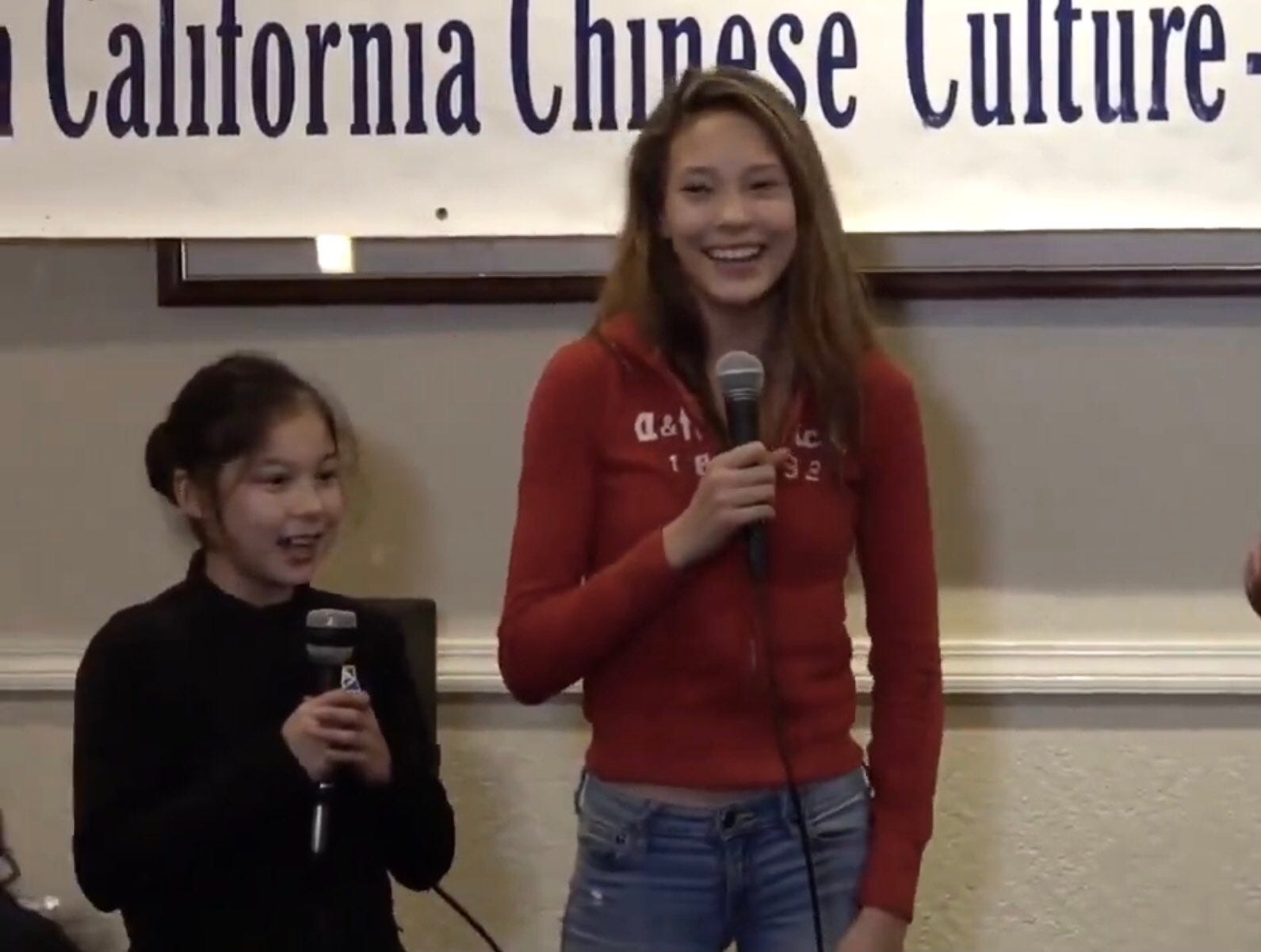
Both won gold. One medal served as an admission ticket to a higher stratum. The other was a self-awarded proof: I can live in my own way.
The question these two lives raise is not about nationality or loyalty. It is about what we mean by success — and whether the logic that once made success legible is still sufficient to explain what we are seeing. That logic has a name. It is called meritocracy. And the five parts that follow are an attempt to examine, as precisely as possible, why it is no longer as convincing as it once was.